
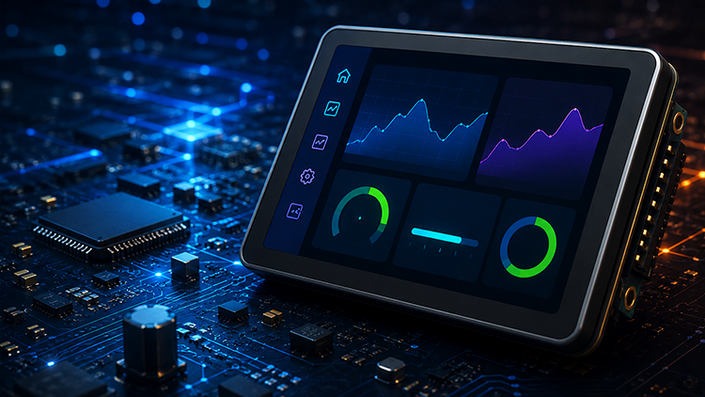
Cross-Platform Embedded GUI Development with LVGL
Master LVGL, the open-source graphics library for modern cross-platform embedded GUIs, with ecosystem support across STM32, NXP, Zephyr, and beyond.
Watch Promo
Modern embedded products are increasingly expected to include clean, responsive, professional graphical user interfaces. Screens, dashboards, touch controls, status panels, and interactive visual feedback are no longer limited to high-end consumer devices. They are now appearing across industrial systems, medical devices, IoT products, smart appliances, control panels, test equipment, and connected embedded products.
This course teaches you how to build those interfaces using LVGL, the open-source graphics library for modern cross-platform embedded GUIs.
You will use STM32 as the hands-on implementation platform, but the deeper skill you will learn is the LVGL workflow itself: display drivers, touch input, rendering buffers, DMA transfers, widgets, events, styling, and UI-builder integration. That makes the course especially valuable for developers who want a GUI skill that is not locked to one vendor ecosystem.
You will begin by understanding the architecture of a modern embedded GUI system, then move into practical implementation. You will configure the STM32 project, integrate LVGL, bring up the display, connect the touch controller, implement the display flush callback, register the input device, create interactive widgets, style the interface, handle events, separate UI logic from application logic, and build a complete embedded device control dashboard.
What You Will Learn
You will learn how to:
- Build modern embedded GUIs using LVGL.
- Understand the architecture of a cross-platform embedded GUI system.
- Set up LVGL inside an STM32CubeIDE project.
- Configure the display and touch interface for an STM32-based GUI system.
- Implement the LVGL display port and flush callback.
- Use display buffers, color formats, and DMA rendering correctly.
- Register a touch input device with LVGL.
- Map raw touch coordinates to screen coordinates.
- Create screens, objects, widgets, labels, buttons, switches, sliders, and bars.
- Style LVGL widgets for a more professional interface.
- Use layouts and alignment to build cleaner embedded screens.
- Handle LVGL events and connect UI actions to firmware behavior.
- Separate UI logic from application logic.
- Integrate generated UI code from a UI-builder workflow.
- Debug common LVGL problems, including blank screens, wrong colors, touch issues, and broken display updates.
- Build a complete embedded device control dashboard as the final project.
- If you already know TouchGFX, this course gives you a complementary GUI skillset. TouchGFX teaches the STM32-native GUI path. This course teaches the cross-platform LVGL path, using STM32 as the practical hardware platform.
- By the end of the course, you will understand how LVGL works from the inside out and how to build, debug, and structure professional embedded GUI projects for modern display-based systems.
Who This Course Is For
This course is for embedded developers who want to build real graphical interfaces for embedded products.
It is especially suitable for:
- STM32 developers who want to add professional touchscreen interfaces to their projects.
- Embedded C developers who want to move into GUI-based firmware development.
- Firmware engineers who already understand peripherals but want to understand display, touch, and UI integration.
- Developers who have used TouchGFX and now want to learn the cross-platform LVGL workflow.
- Engineers building products with screens, dashboards, control panels, HMIs, smart-device interfaces, or embedded touch displays.
- Students and professionals who want a practical path into modern embedded GUI development.
Frequently Asked Questions
Your Instructor

EmbeddedExpertIO represents a vibrant collective dedicated to the mastery of sophisticated embedded systems software development for professionals.
Our core objective is to equip individuals and organizations with the indispensable skills to thrive in the swiftly evolving embedded systems sector. We achieve this by providing immersive, hands-on education under the guidance of seasoned industry specialists. Our ambition is to emerge as the favored learning platform for embedded systems development professionals across the globe.